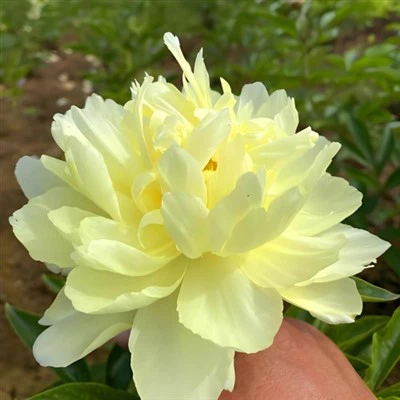
If you've ever wandered through a well-tended flower bed and spotted a bloom that looks like it blushed right before your eyes, chances are it might be an Angel Cheek Peony. As someone who's been growing and supplying these beauties for the past 8 years, I get asked nonstop: "Is Angel Cheek Peony a good choice for a flower bed?" Spoiler alert-for most people, the answer is a resounding yes, but there's a few things you need to know before you dig in. Let's break this down like I would with a fellow gardener over coffee, no fancy horticulture jargon required.
First, let's start with the basics: what exactly is an Angel Cheek Peony, anyway? For those who don't know, it's a herbaceous peony, which means it dies back to the ground every winter and pops back up with fresh, vigorous growth in spring. Its name is so on point-when it blooms, the petals are a soft, pale pink that deepens a tiny, tiny bit at the edges, like a kid's cheek after running outside in the cold. It's not super flashy (looking at you, bold reds or yellows), but that subtlety is exactly why it works so well in flower beds.
Now, let's talk flower bed specific stuff, because that's the real question here. Flower beds aren't just about one plant-they're about how things grow together, how much sun they need, how big they get, and whether they'll stick around year after year. Let's dive into each of those points for Angel Cheek, because that's what really matters when picking plants for your bed.
Sunlight needs are non-negotiable for peonies, and Angel Cheek is no exception. They need at least 6 hours of full sun a day-sorry, partial shade folks. Wait, why? Because too little sun and they'll produce leggy growth and hardly any blooms. I've seen so many new gardeners plant their peony in a spot that's shaded by a big tree or a fence, and then wonder why it's not performing. If your flower bed has a sunny spot (most do-they're usually the main sunny area of your yard), Angel Cheek will thrive there. For comparison, if you're looking for something a bit more flexible on shade, there are other peonies, but if you're set on sunny, Angel Cheek is perfect.
Next, size and spacing. Angel Cheek Peony plants get pretty big-like, 2-3 feet tall and 2-3 feet wide. That's not tiny, so you can't tuck it in next to a tiny annual or something that only grows a foot tall. It needs room to spread out and get good air circulation, which helps prevent fungal issues like powdery mildew (a common problem for peonies if they're crowded). When planting, give each Angel Cheek at least 3 feet of space between it and other plants in your flower bed. Pairing it with plants that are a bit shorter or have different textures works great-low-growing sedum, for example, or lavender that blooms a bit earlier in the season so it's already fading when the peony gets big. If you're looking for other peonies that play well with different sizes, you might check out Yellow Peony Seedlings (/herbaceous-peony/dutch-peony/yellow-peony-seedlings.html) which are a bit smaller when young but grow to a similar size, or Charles White Peony (/herbaceous-peony/dutch-peony/charles-white-peony.html) which is a taller variety if you need some height in the back of your bed.


Bloom time is another big one for flower beds-you want your plants to bloom in sequence so you have color from spring to early summer, not just a week or two of blooms. Angel Cheek is a mid-season peony, which means it blooms right around late May to early June, depending on your zone. That's perfect because it fills in the gap between early spring bloomers like tulips and late spring ones like irises. If your flower bed has early bloomers at the front, Angel Cheek in the middle, and late bloomers like daylilies at the back, you'll have color for months. For example, Coral Sunset Peony (/herbaceous-peony/dutch-peony/coral-sunset-peony.html) blooms a bit earlier than Angel Cheek, so they make great companions, and Hawaiian Coral Pink Peony (/herbaceous-peony/dutch-peony/hawaiian-coral-pink-peony.html) is mid-to-late, so together they give you three weeks of peony blooms instead of just one. That's a game-changer for flower beds, because you don't want all your plants blooming at once and then having a dead spot for the rest of the summer.
Hardiness is huge if you live in a place with cold winters, and Angel Cheek is a tough cookie. It's hardy in zones 3-8, which covers most of the continental US, and even parts of Canada. That means it can handle temperatures down to -40°F in winter, and as warm as 90°F in summer (though in really hot zones, a tiny bit of afternoon shade is okay, but still not too much). The key here is that it's a perennial, so it comes back every single year, no replanting needed. I've had some Angel Cheek plants for over a decade, and they're still blooming better than the day I planted them. That's way better than annuals that you have to buy and plant every spring-perfect for low-maintenance flower beds.
Now, let's talk about the "cons" because no plant is perfect, right? You might have heard that peonies are fussy, but Angel Cheek is actually one of the more forgiving varieties. The main downsides? First, they don't like to be moved. Once you plant them, leave them there-they can take 2-3 years to get established, and moving them will set them back. Second, they need support when they bloom. Those big, fluffy blooms (Angel Cheek has double petals, so it's super full) can get heavy, especially if it rains. If you don't stake them, they'll flop over and lie on the ground, which can make them rot. The good news is peony stakes are cheap, or you can use a simple circular ring around the plant, and they're barely noticeable. I usually just put mine in early spring before the stems get too tall, and no one can tell they're there once the plant is full.
Another thing to consider: pests. Peonies generally don't have too many pest issues, but ants love the buds. Don't panic-that's totally normal! Ants are attracted to the sweet nectar on the buds, and once the blooms open, they'll leave. You can wash them off with a spray of water if you want, but it's not necessary and won't hurt the peony. The only real pest issue I've seen with Angel Cheek is botrytis, a fungal disease that causes brown spots on the buds. That usually happens if the plant is too crowded, or if there's too much moisture on the leaves overnight. So, making sure they have good air circulation (like spacing them properly) and not watering the leaves (water at the base instead) prevents that.
Wait, let's get specific to flower bed design because that's what this is all about. If you're building a new flower bed, Angel Cheek works great as a focal point-its soft pink color pairs well with almost every other flower, from purples (lavender, salvia) to whites (shasta daisies, the Charles White Peony I linked earlier) to even yellows (the Yellow Peony Seedlings, though seedlings take a year or two to bloom). It's not a plant that will clash, so it's perfect if you want a cohesive, romantic look for your bed. If you have a more modern flower bed with bold colors, it might be a bit too subtle, but most people go for that soft, cottage garden vibe, and Angel Cheek is a staple in those.
I should also mention that as a supplier, I've had so many customers come back and say their Angel Cheek is the star of their flower bed. One customer in Ohio told me she planted three of them along her front walk, and every spring, her neighbors stop to take photos. Another in Texas (zone 8) said hers have been blooming for 7 years, even through the hot summers. The only time someone had an issue was when they planted it in full shade, so that's the main mistake to avoid.
Let's also touch on maintenance, because that's important for busy gardeners. Angel Cheek is low-maintenance. Once it's established (after the first two years), all you need to do is: cut back the dead foliage in late fall (don't leave it over winter, because it can harbor disease), give it a light fertilizer in early spring (I use a balanced, all-purpose fertilizer-nothing fancy), and water it during dry spells. That's it. No deadheading needed, though you can cut the blooms for vases if you want-Angel Cheek makes amazing cut flowers, so you can enjoy them inside and in your bed. Speaking of cut flowers, if you're into that, Hawaiian Coral Pink Peony is also a great cut flower option, so you could pair that in your bed too.
Wait, let's make sure we're answering the original question clearly: Is Angel Cheek Peony a good choice for a flower bed? Yes, if: 1) You have a sunny spot (6+ hours of full sun), 2) You have space to let it grow (3 feet between plants), 3) You don't mind staking the blooms (it's easy), and 4) You want a long-lived, low-maintenance perennial that adds soft color in mid-spring. If you don't have full sun, or you need a very small plant, it might not be for you, but for most flower beds, it's a perfect pick.
Now, if you're ready to add Angel Cheek to your flower bed, I supply high-quality, bare-root Angel Cheek Peony (/herbaceous-peony/dutch-peony/angel-cheek-peony.html) that's been grown to thrive in a variety of zones. Bare-root plants are great because they establish faster than potted ones, and you can plant them in fall or early spring. Whether you're building a new bed or adding to an existing one, Angel Cheek pairs beautifully with other peonies, perennials, and even some annuals. If you're looking for other varieties to mix in, we also carry Yellow Peony Seedlings, Charles White Peony, Coral Sunset Peony, and Hawaiian Coral Pink Peony-all peonies that work great in flower beds, either as companions or to extend your bloom time.
If you have questions about spacing, planting time, zone suitability, or anything else related to adding Angel Cheek Peony to your flower bed, feel free to reach out to discuss your specific needs and find the right plants for your space.