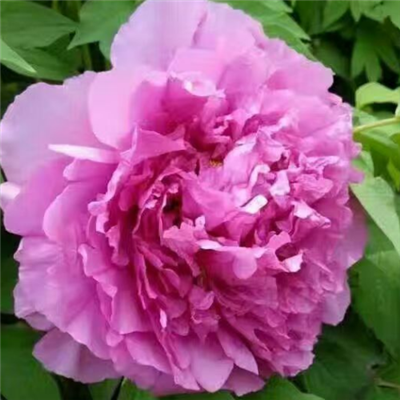
As a dedicated supplier of Red Tree Peony, I've always been fascinated by the intricate biological processes that contribute to the growth and vibrancy of these magnificent plants. One of the most fundamental and awe - inspiring processes is photosynthesis, which is the very lifeblood of the Red Tree Peony.
The Basics of Photosynthesis
Photosynthesis is a biochemical process that occurs in plants, algae, and some bacteria. It is the mechanism by which these organisms convert light energy, usually from the sun, into chemical energy stored in glucose. The overall equation for photosynthesis is (6CO_2 + 6H_2O+ \text{light energy}\rightarrow C_6H_{12}O_6+6O_2). In simpler terms, carbon dioxide and water are transformed into glucose and oxygen with the help of light.
The Structure of Red Tree Peony Leaves and Its Role in Photosynthesis
The leaves of the Red Tree Peony are the primary sites of photosynthesis. They are composed of several layers, each with a specific function. The upper epidermis is a thin, transparent layer that protects the inner tissues of the leaf and allows light to penetrate. Just beneath the upper epidermis is the palisade mesophyll layer. The cells in this layer are tightly packed and contain a large number of chloroplasts. Chloroplasts are the organelles where photosynthesis actually takes place. They contain chlorophyll, a green pigment that absorbs light energy.
The spongy mesophyll layer lies below the palisade mesophyll. This layer has loosely arranged cells with large air spaces between them. These air spaces facilitate the exchange of gases, allowing carbon dioxide to enter the leaf and oxygen to exit. The lower epidermis contains stomata, which are small pores that can open and close. Stomata regulate the exchange of gases and the loss of water vapor through a process called transpiration.
The Light - Dependent Reactions
The first stage of photosynthesis is the light - dependent reactions, which occur in the thylakoid membranes of the chloroplasts. When light is absorbed by chlorophyll, it excites electrons within the pigment molecules. These excited electrons are then passed along an electron transport chain. As the electrons move through the chain, energy is released and used to pump hydrogen ions (protons) from the stroma into the thylakoid lumen, creating a proton gradient.
This proton gradient drives the synthesis of ATP (adenosine triphosphate), a molecule that stores energy. At the same time, water molecules are split in a process called photolysis. The oxygen from the water is released as a by - product, while the hydrogen ions and electrons are used to reduce NADP+ to NADPH. Both ATP and NADPH are energy - rich molecules that will be used in the next stage of photosynthesis.
The Light - Independent Reactions (Calvin Cycle)
The light - independent reactions, also known as the Calvin cycle, take place in the stroma of the chloroplasts. This cycle does not directly require light, but it depends on the ATP and NADPH produced in the light - dependent reactions.
The Calvin cycle begins with the fixation of carbon dioxide. An enzyme called RuBisCO (ribulose - 1,5 - bisphosphate carboxylase/oxygenase) catalyzes the reaction between carbon dioxide and a five - carbon molecule called RuBP (ribulose - 1,5 - bisphosphate). This results in the formation of two three - carbon molecules called 3 - phosphoglycerate (3 - PGA).
ATP and NADPH are then used to convert 3 - PGA into glyceraldehyde - 3 - phosphate (G3P). Some of the G3P molecules are used to regenerate RuBP, allowing the cycle to continue. The remaining G3P molecules are used to synthesize glucose and other organic compounds.
Factors Affecting Photosynthesis in Red Tree Peony
Several factors can influence the photosynthetic rate of Red Tree Peony. Light intensity is crucial. Insufficient light can limit the rate of the light - dependent reactions, while excessive light can cause damage to the photosynthetic apparatus. Temperature also plays a significant role. Photosynthesis is an enzyme - mediated process, and enzymes have an optimal temperature range. If the temperature is too low or too high, the activity of the enzymes involved in photosynthesis will be reduced.
Carbon dioxide concentration is another important factor. Higher levels of carbon dioxide can increase the rate of the Calvin cycle, leading to more efficient photosynthesis. However, in natural environments, the availability of carbon dioxide can be limited. Water availability is also essential. If the plant is water - stressed, the stomata will close to reduce water loss, which in turn restricts the entry of carbon dioxide into the leaf and slows down photosynthesis.
The Significance of Photosynthesis for Red Tree Peony
Photosynthesis is the foundation of the Red Tree Peony's growth and survival. The glucose produced through photosynthesis serves as a source of energy for various metabolic processes, such as cell division, growth, and reproduction. It is also used to synthesize other important molecules, including cellulose for cell walls, proteins, and lipids.
The oxygen released during photosynthesis is not only beneficial for the plant itself but also for the surrounding environment. It contributes to the oxygen content in the atmosphere and supports the respiration of other organisms.


Comparison with Other Tree Peony Colors
While the photosynthetic process is fundamentally the same across different colors of tree peonies, there may be some subtle differences. For example, the pigmentation in Black Tree Peony may affect the way it absorbs and reflects light. The darker pigments could potentially absorb more light in certain wavelengths, which might influence the efficiency of the light - dependent reactions.
Similarly, Yellow Tree Peony and Orange Tree Peony have their own unique pigment compositions. These pigments may interact with light in different ways compared to the red pigments in Red Tree Peony, but the overall photosynthetic machinery remains consistent.
Conclusion and Invitation to Purchase
Understanding the photosynthesis process of Red Tree Peony gives us a deeper appreciation for these beautiful plants. As a supplier, I am committed to providing high - quality Red Tree Peony specimens that have been nurtured under optimal conditions to ensure healthy photosynthesis and vibrant growth.
If you are interested in purchasing Red Tree Peony for your garden, landscaping project, or any other purpose, I invite you to reach out for a detailed discussion. Whether you are a professional gardener, a landscape architect, or an enthusiastic plant lover, I am here to assist you in making the best choices for your needs. Let's work together to bring the beauty and elegance of Red Tree Peony to your space.
References
- Taiz, L., & Zeiger, E. (2010). Plant Physiology. Sinauer Associates.
- Buchanan, B. B., Gruissem, W., & Jones, R. L. (2015). Biochemistry and Molecular Biology of Plants. Wiley - Blackwell.